Crossroads Cultural Resource Management has worked closely with Witset First Nation for many years, supporting the community’s efforts to safeguard and strengthen its cultural heritage. Our partnership is built on trust, collaboration, and shared commitment to ensuring that Wet’suwet’en knowledge, values, and voices are reflected in every stage of our work.
Together, we’ve developed policies, procedures, and studies that protect sacred sites, guide cultural heritage management, and support community-driven decision-making. Whether helping to create interim policies for the care of ancestral remains, conducting heritage assessments, or facilitating community engagement, Crossroads CRM continues provide support and work in alignment with Witset’s priorities and protocols
Telkwa Mining - Tenas Project Cultural Use Study
About the Project
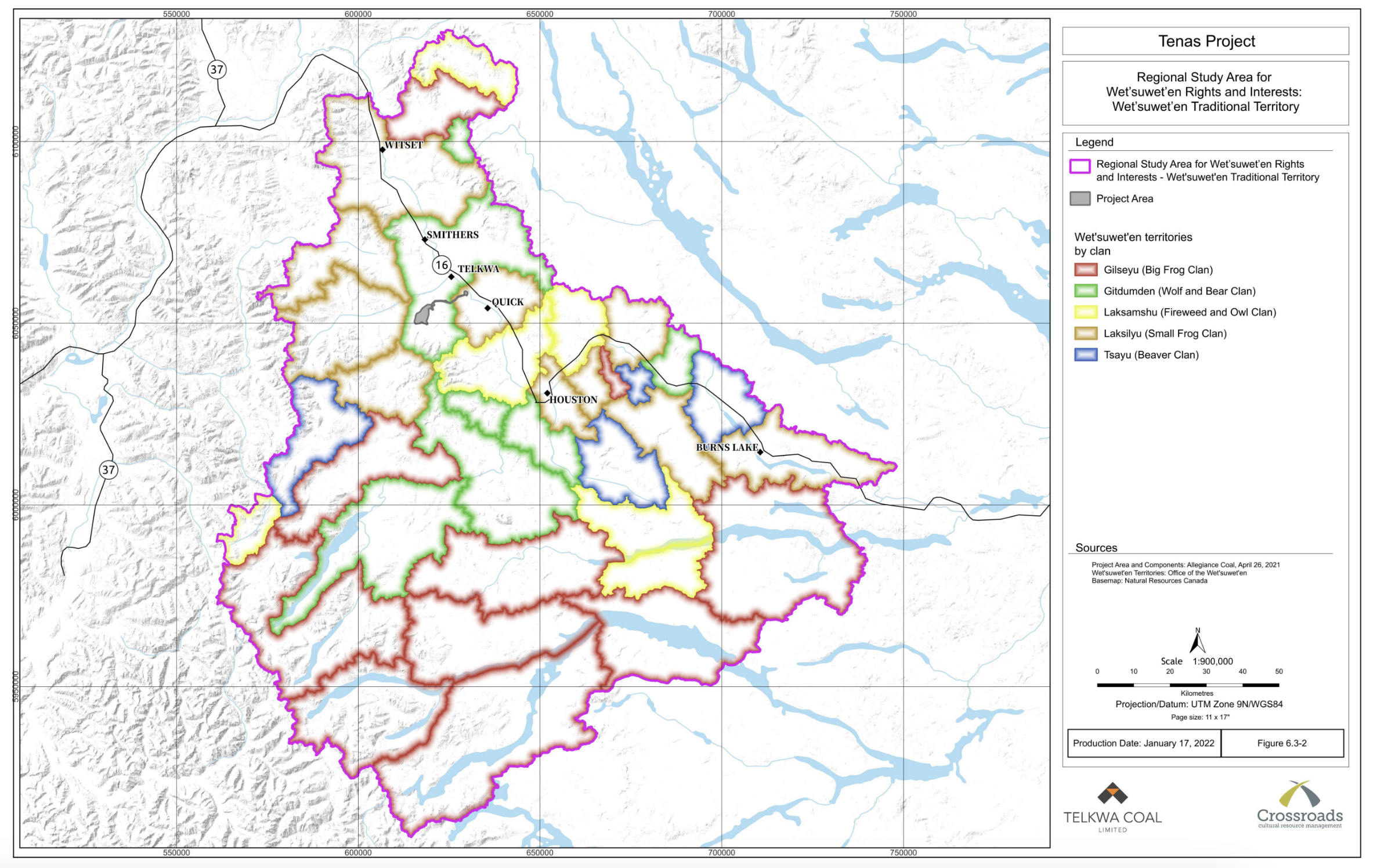
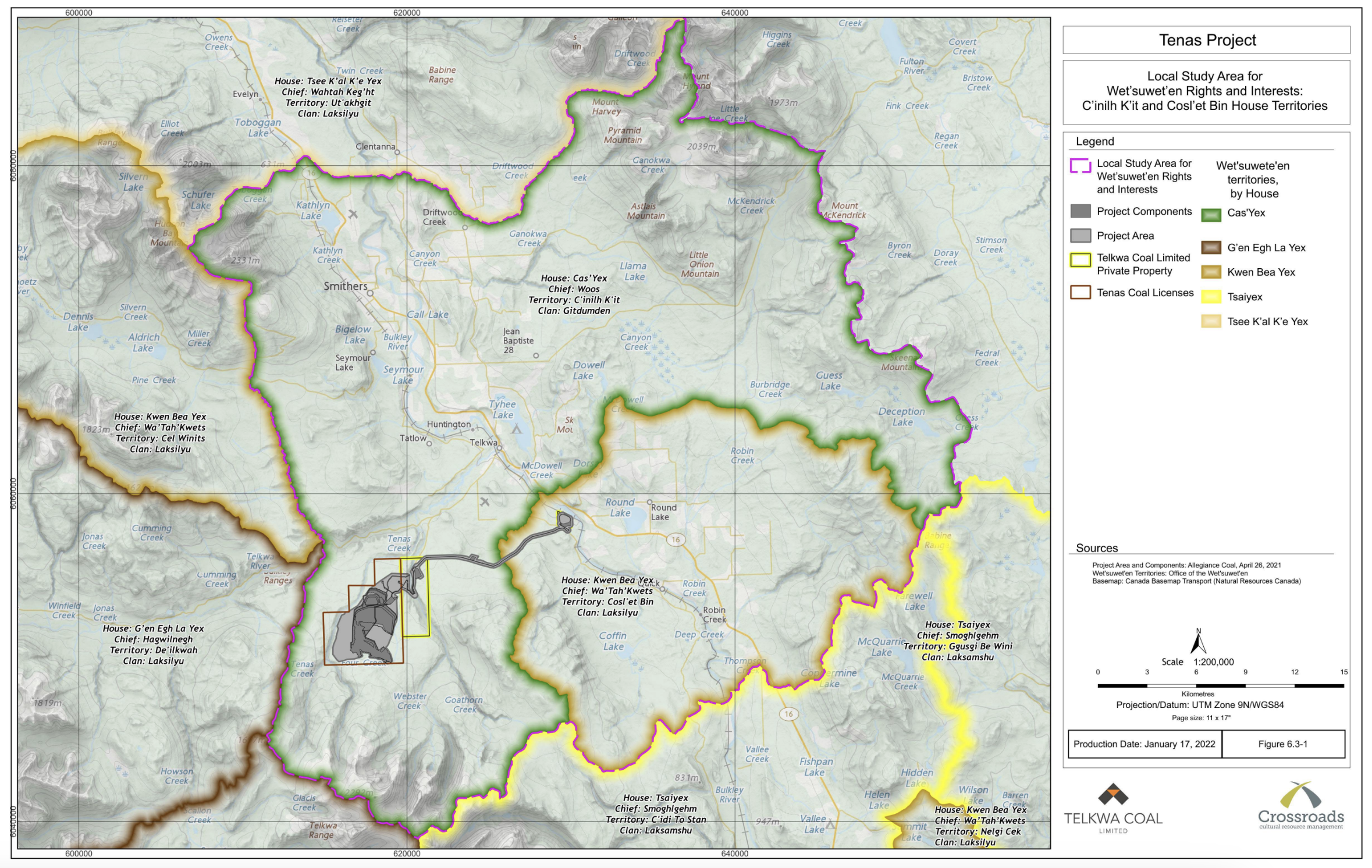
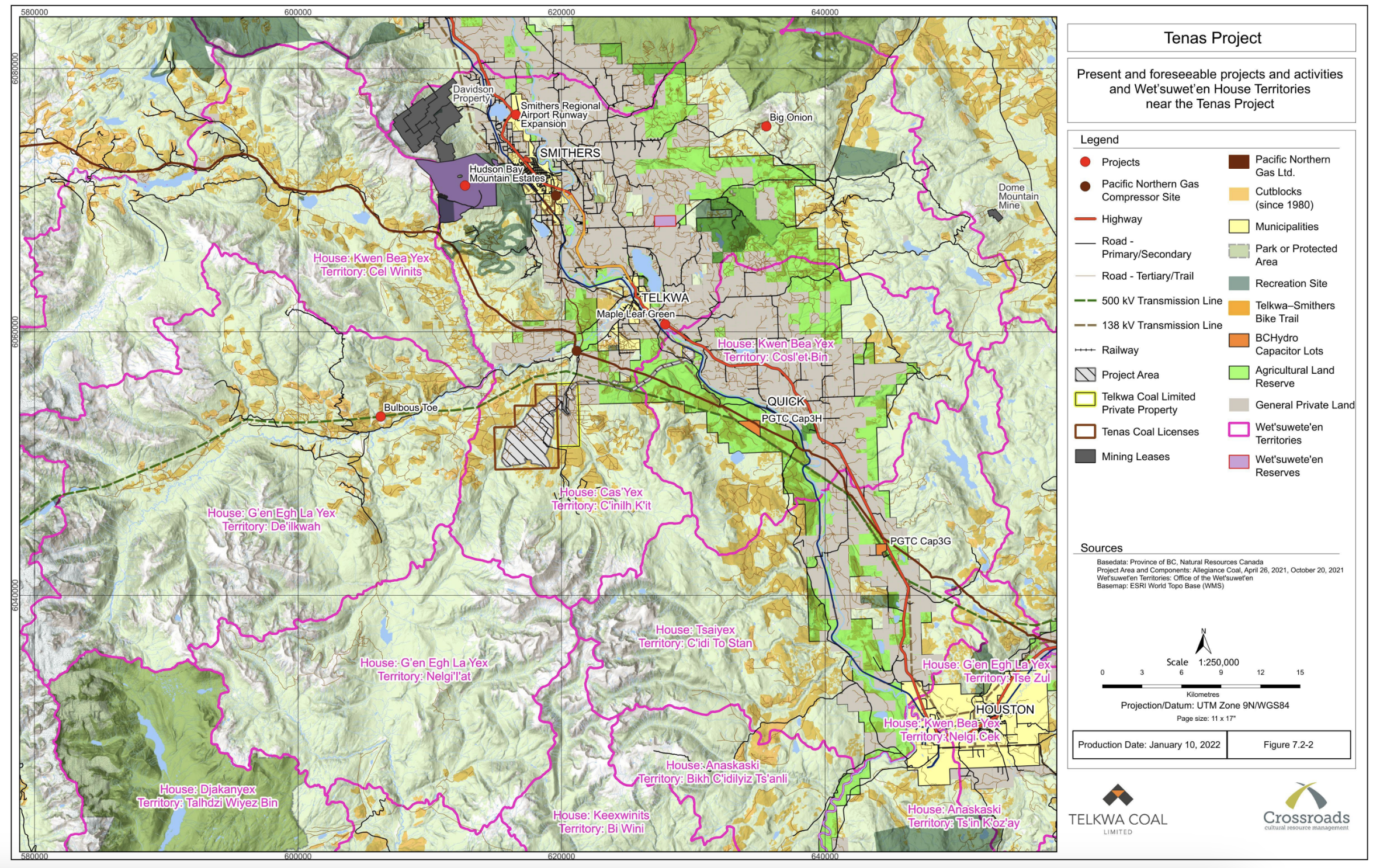
The Wet’suwet’en Cultural Use Study (CUS) for the Tenas Project was prepared for Telkwa Mining Ltd. by Crossroads Cultural Resource Management (CCRM). The study documents Wet’suwet’en cultural heritage, traditional land use, governance, and values within and around the proposed Tenas metallurgical coal mine near Telkwa, BC. It compiles extensive baseline data on Wet’suwet’en history and land-based practices, particularly within the Cas’Yex and Kwen Bea Yex House territories and outlines potential cultural and environmental impacts.
Currently, CCRM is seeking to address gaps left by earlier engagement limitations, particularly those arising from pandemic restrictions from 2020 to 2021, and to ensure that the CUS reflects current community perspectives and conditions. This work builds upon past and ongoing communications and input from the Office of the Wet’suwet’en (OW), Witset First Nation, Wet’suwet’en First Nation (WFN), Skin Tyee Nation, and site-specific family engagements.
This document supports the requirements of the Environmental Assessment Act (2018) which requires proponents to demonstrate meaningful engagement with Indigenous Nations and integrate that engagement into project planning and reporting. Beyond fulfilling regulatory obligations, the CUS plays a role in ensuring that Wet’suwet’en voices, knowledge, and perspectives are meaningfully reflected in the decision-making for the Tenas Project. The study seeks to create a platform through which Wet’suwet’en hereditary and band governments, as well as site-specific knowledge holders, can share their insights and priorities, and help assert Wet’suwet’en culture, governance, and connection to Yintah.
Telkwa Mining - Witset Socio-Economic Study
About the Project
The Witset First Nation Socio-Economic Study for the Tenas Project is being undertaken by CCRM in collaboration with Witset First Nation. It examines how the proposed metallurgical coal mine near Telkwa may affect the social and economic, and Witset members, both on and off reserve.
It provides a detailed understanding of current community conditions, including housing, employment, education, income, health, and infrastructure, while also considering the cumulative effects of regional development. Its goal is to identify potential risks and opportunities associated with the project and assist in framing community priorities, asserting values, guiding mitigation and enhancing planning measures.
Engagement for the Socio-Economic Study and the CUS is being carried out in tandem to maximize participation while minimizing community fatigue. Together, these studies form a comprehensive, community-driven foundation for understanding potential project impacts and ensuring that Wet’suwet’en and Witset perspectives are meaningfully integrated into decision-making and regulatory processes for the Tenas Project.
Image 1 of 3
BC Hydro GTTT Cultural Use Study
About the Project
The Wet'suwet'en Cultural Use Study (CUS): Witset First Nation for BC Hydro's Glenannan to Terrace Transmission (GTTT) Project was prepared by CCRM in collaboration with Witset First Nation. The project involves the construction of a 500-kilovolt (kV) high-voltage transmission line spanning approximately 275 kilometres from the Glenannan Substation near Fraser Lake to the Skeena Substation near Terrace, and is part of BC Hydro’s broader effort to expand its clean-energy transmission network to meet increasing electricity demand across the North Coast region. Where possible, the new line will follow existing transmission corridors to help limit new environmental and cultural disturbances.
The CUS documents Wet’suwet’en cultural heritage, governance, and land use across Wet’suwet’en territory, with particular attention to the project’s potential impacts on Witset First Nation. It compiles existing information on Wet'suwet'en cultural values, traditional knowledge, and land-based practices, identifying key areas of cultural significance and outlining potential environmental and social considerations related to the proposed transmission line.
The project is currently in the community engagement phase, with outreach underway to gather feedback, stories, and perspectives. This engagement will form the foundation of the final study, ensuring Wet’suwet’en voices and lived experiences are central to how cultural impacts are understood and addressed.
BC Hydro GTTT Socio-Economic Study
About the Project
The Wet’suwet’en Socio-Economic Study:Witset First Nation for the Glenannan to Terrace Transmission (GTTT) Project was prepared by CCRM in collaboration with Witset First Nation. As a companion to the Cultural Use Study, it explores how the proposed transmission line may influence the social, economic, and community well-being of Witset members.
The study establishes a detailed baseline of current community conditions covering housing and infrastructure, education and training, employment, and access to health and social services. It highlights community strengths and challenges, offering insight into how development may affect quality of life, economic participation, and long-term sustainability.
Like the CUS, this study is in the engagement phase which will allow the final report to accurately reflect community realities and priorities. Together, the two studies offer a holistic understanding of potential project impacts, linking land, culture, and community, and provide a framework for dialogue and planning that respects Wet’suwet’en governance and supports community-led approaches to well-being and development.