Why We Are Here
Working Together on the Tenas Project
In late 2022, the provincial Environmental Assessment Office (EAO) updated the requirements for how the Tenas Project must involve Indigenous communities through the Tenas Transition Order. These changes mean that Telkwa Mining must continue working closely with the Office of the Wet’suwet’en, as we have since 2016, and also engage directly with the Witset First Nation, Wet’suwet’en First Nation, and Skin Tyee Nation.
Over the past two years (2024 and 2025), Telkwa Mining has held a number of meetings and engagement events to listen, share information, and learn from these Nations.
In 2024, Telkwa Mining and our parent company, Bathurst Resources, signed a Project Assessment Agreement with the Office of the Wet’suwet’en. This agreement creates a stronger foundation for working together and opens the door to future discussions about benefit agreements that could bring long-term opportunities to the community.
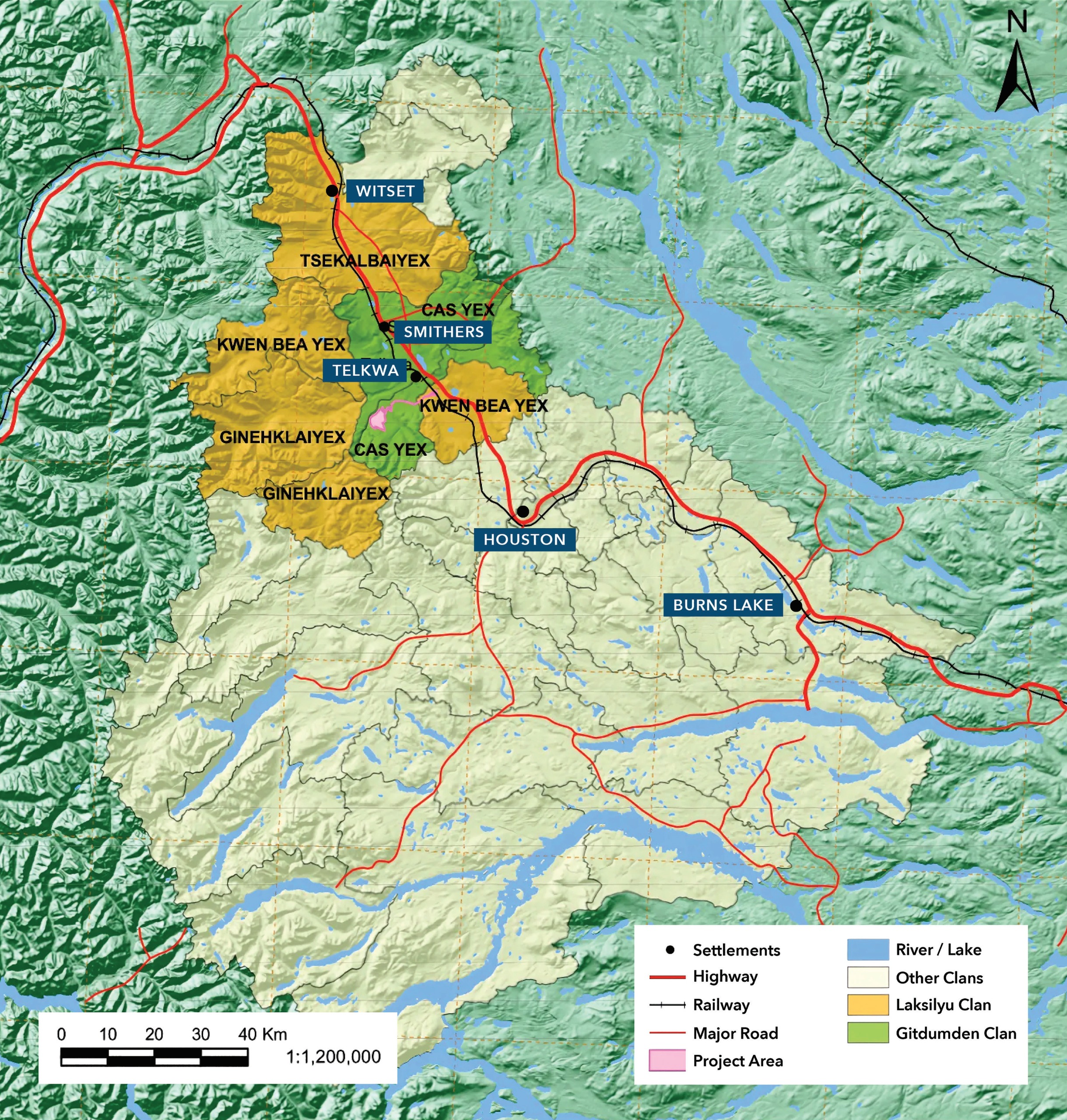
Below: Wet’suwet’en
Clan and House
Territories
with the Tenas
Project
Project Overview
Telkwa Mining Limited is proposing to develop the Tenas Project, a steelmaking or metallurgical coal mine in British Columbia’s northwest region. Telkwa Mining is 100% owned by Bathurst Resources Ltd.
Telkwa Mining is committed to working with the Wet’suwet’en and the local community to responsibly develop the Tenas Project. For us, that means continuing to listen and engage in open dialogue as we proceed with the project review, Environmental Assessment and regulatory process, which will continue through the life of the Project. We have been engaging with the Wet’suwet’en since 2016, and the local community since 2017.
We look forward to maintaining an open dialogue with our neighbours, working to address community questions, and developing the Tenas Project responsibly and respectfully.
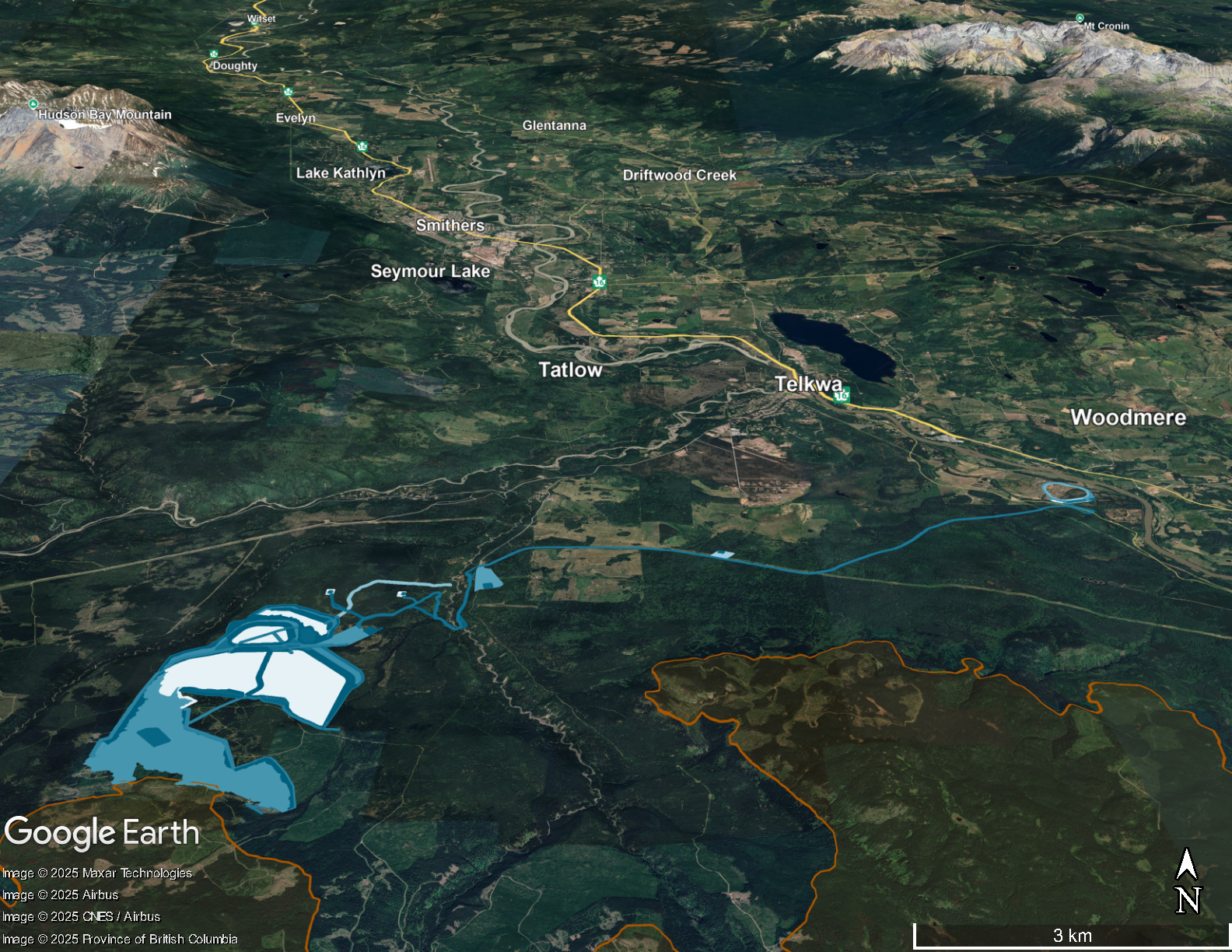
Aerial view of the Tenas Project
Please click icons to view information
Proposed Timeline
-
Timeline item 1 - complete
Baseline Phase 1
2016-2017
Baseline Studies and Pre-feasibility Study
-
Timeline item 2 - complete
Baseline Phase 2
2018-2019
Baseline Program & Feasibility Study
Project Description submitted to BC EAO
-
Timeline item 3 - active
Regulatory Phase
2018-2026
Environmental Assessment and Permitting
2022 EAC Application Submitted
Ongoing Environmental Monitoring & Cultural Studies
2018: Community Open Houses 1 and 2
2019: Community Open Houses 3
2020: Community Open Houses 4
2021: Indigenous Information Session 1 & 2
2022: Community Open House 5
2025: Indigenous Information Session 3
2025 Q4: Submission of Information Requirements from 2022
2025 Q4: TML Public Engagement & Comment Period
2026 Q2: EAO Public Engagement & Comment Period
-
Timeline item 4 - incomplete
Regulatory Decision Phase
2026
Effects Assessment & Recommendations
Decision
2026-2027
Provincial permitting process
-
Timeline item 5 - incomplete
Construction
2027-2028
- Logging and brush clearing to construct roads,
- Clear and level plant site,
- Build non-contact ditches,
- Install settling ponds,
- build processing plant and other buildings.
-
Timeline item 6 - incomplete
Operations
2028-2048
Open Pit mine development
Processed Coal trucked to Rail Infrastructure for shipment overseas
-
Timeline item 7 - incomplete
Closure & Reclamation
2049+
Useful Links
Tenas Project Website: https://telkwa-mining.ca
Bathurst Resources Website: https://bathurst.co.nz
Morice Watershed Monitoring Trust Watershed monitoring and management: https://www.mwmt.ca/ and https://public.tableau.com/app/profile/skeena.know...
Videos:
Introduction to Bathurst Resources
Tenas Project Components and Overview
Tenas drone flyover of proposed Project Area and surroundings
Tenas Viewpoint 11 Project Rendering
Tenas Viewpoint 13 Project Rendering
Document Library
-
Tenas Project Wet'suwet'en Information Sharing Session Oct 23, 2025PDF (9.95 MB)
-
Tenas Project Brochure June 2025PDF (7.06 MB)
-
Project Location and Why CoalPDF (7.57 MB)
-
Project Key Facts and Environmental AssessmentPDF (804.75 KB)
-
Project BenefitsPDF (879.21 KB)
-
Job Profiles and RequirementsPDF (10.06 MB)
Letter that includes job descriptions and requirements for the purpose of information sharing.
-
BC Guide to Involving Proponents When Consulting First NationsPDF (362.15 KB)
-
Employment, Contracts and OpportunitiesPDF (3.47 MB)
Project Information Boards
Tell Us Your Story
Witset Community Questions
We are listening and value your input.
Based on responses directly from community events, the following shows a graph representing concerns expressed on feedback cards followed by a ranking of the top 10 responses to what was done well and what could be improved.
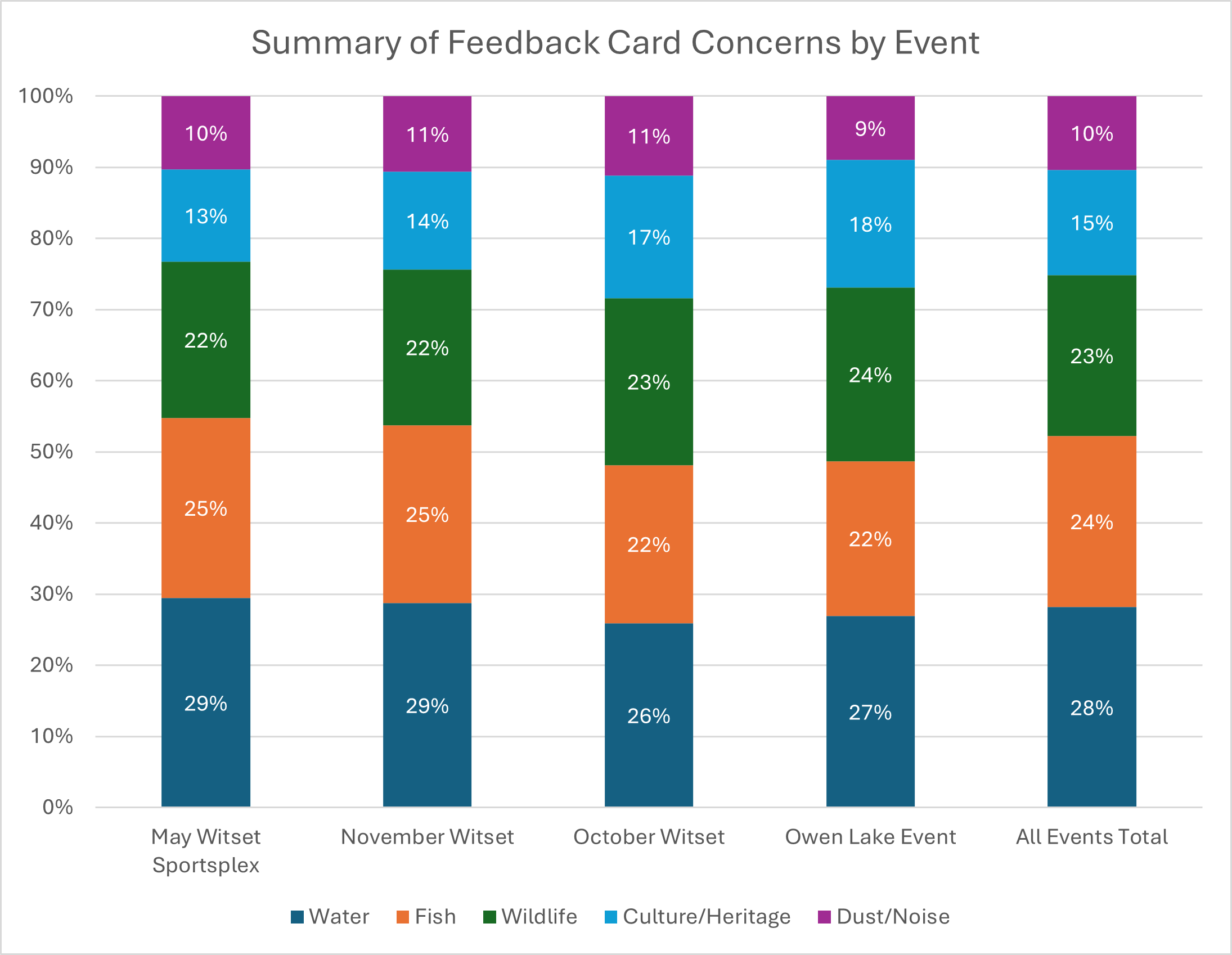
Top 10 Issues by Column (with Percentages)
| Rank | Column A – What did you like most about this event? | % of Responses | Column B – What could we improve upon? | % of Responses |
| 1 | Information quality & clarity | 37.3% | Indigenous inclusion & governance | 17.1% |
| 2 | Community gathering & connection | 11.3% | Advertising, outreach & attendance | 14.5% |
| 3 | Cultural & Indigenous representation | 8.7% | Information & presentation delivery | 9.4% |
| 4 | Effective outreach & turnout | 8.7% | Environmental & safety concerns | 9.4% |
| 5 | Hospitality (food, prizes, amenities) | 6.7% | Jobs, training & long‑term opportunities | 7.7% |
| 6 | Food & catering quality | 6.0% | Activities & engagement opportunities | 7.7% |
| 7 | Jobs & employment opportunities | 4.7% | Food & catering quality | 6.0% |
| 8 | Environmental & safety awareness | 4.7% | Community gathering & dialogue | 6.0% |
| 9 | Activities (canoeing, biking, fishing, etc.) | 4.0% | Transportation & access | 4.3% |
| 10 | Event logistics & setup | 1.3% | Prizes & incentives | 3.4% |
Percentages reflect share of valid responses per column (Column A: n = 150; Column B: n = 117).
For responses to specific concerns, please search and expand below:
Telkwa Mining is committed to working with the Wet’suwet’en to develop an access plan that minimizes restrictions to areas outside of direct active mining activities. This includes areas used for hunting, food harvesting, and cultural and ceremonial activities. The reclamation plan specifies planting of native plant species within the Project Area, including species that are important to the Wet’suwet’en, such as berry producing plants.
Berry species have been successfully re-established at reclaimed mine sites, including species such as raspberry, strawberry, Saskatoon, blueberry, low-bush cranberry, huckleberry, and kinnikinnick. For this reason, Telkwa Mining is confident that a range of berry species can be re-established during the reclamation of the Tenas Project. Telkwa Mining aims to establish berries comparable to pre-mining conditions, in appropriate reclamation ecosystems, using soil salvage and placement strategies developed for the reclamation plan.
The Project will not limit fishing activities in the Telkwa and Bulkley Rivers, nor in the Tenas and Goathorn Creeks. Telkwa Mining has developed a comprehensive and transparent monitoring plan for vegetation, fish, dust, noise, and water. The monitoring results will be compared against appropriate guidelines, such as human consumption, and EA modelled predicted values and made available to the Wet’suwet’en, regulatory agencies, and the public. Based on the predictive modelling that has been completed to date and the Independent Human Health Risk Assessment conducted, no adverse effects have been identified related to the consumption of traditional foods or wildlife in the Project Area.
Telkwa Mining approached the Office of the Wet’suwet’en to seek permission prior to accessing the traditional lands where the Project is located including exploration activities. Telkwa Mining will continue to inform the Office of the Wet’suwet’en of all activities occurring on the land on an annual basis. Telkwa Mining will include Witset First Nation Band on these communications moving forward.
Telkwa Mining recognizes the importance of Indigenous inclusion and has committed to a workforce that includes approximately 15% Indigenous employees from the region. To facilitate this commitment and to minimize barriers to employment, several positions will be available that do not require previous mining experience in addition to providing free transportation between the Project and Witset.
Methane explosion hazards are not characteristic of open pit mining operations and are more typically managed within underground mine settings, where Methane explosions are more common in underground mines, where methane can accumulate due to confined spaces and limited airflow. These mines rely on ventilation systems to circulate air and prevent gas buildup. The Project is a surface coal mine where operations occur in an open-air environment, benefiting from unlimited natural air circulation which eliminates the potential for methane gas buildup and explosions. Telkwa Mining is not aware of any documented methane explosions in open pits over the past 50 years in Western Canada.
The Project is committed to implementing a comprehensive Occupational Safety and Health Management Plan that prioritizes worker safety and promotes a culture of safety. According to the BC Ministry of Mines and Critical Minerals Chief Inspector’s Annual Report for 2023/24, and data from WorkSafeBC, mining in British Columbia has one of the lowest incident rates of fatalities and injuries of industrial activities in the province.
[hyperlink 2023-24_cim-cpo_report_publish.pdf]
Telkwa Mining understands the concern about the loss of plants and animals within the Project Area, and the broader change to the mountain as it exists today. The Project will disturb portions of the landscape; however, detailed environmental studies have been completed to identify and protect important ecological features.
Where rare or sensitive plant species are found, measures such as relocation or replanting are planned to support their continued presence in the region. Telkwa Mining is committed to performing progressive reclamation, which will minimize the extent and duration of areas disturbed during operations, allow native species time to re-establish productive communities, and protect important ecological features that provide habitat for animals. Reclamation will focus on re-establishing native vegetation and habitat features to allow plants and wildlife to return and re-use the area over time.
At a broader landscape scale, the area surrounding the Project contains a similar mosaic of habitat types. Because these habitats remain available, wildlife are expected to continue their normal seasonal movements and to use the region without being displaced or adversely affected at the population level by the Project. Telkwa Mining is committed to performing progressive reclamation which will minimize the extent and duration of areas disturbed for Project operations and allow native species time to re-establish productive communities.
A visual assessment was also conducted for the Project, and the results show few discernible differences when compared alongside current photographs of the Project area, suggesting that the broader visual and ecological character of the landscape will remain largely intact once reclamation is complete.
Telkwa Mining conducted acoustic modelling for blasting and mining activities which demonstrated that a level of 30 dBa was obtained within 2 km of activities. Below this noise level, Caribou no longer react to based on current scientific studies.
[hyperlink https://www.sciencedirect.com/science/article/abs/...
Modelling undertaken during the EAC application indicates that the Project will be below noise and dust regulatory guidelines at its nearest public receptors for the mine and Rail Infrastructure, which occur in closer proximity than the area caribou herds.
Telkwa Mining will implement noise, vibration, and dust monitoring programs and make the results available to the Wet’suwet’en, regulatory agencies and the public directly from the laboratories. The results will also be published in annual reports. Telkwa Mining welcomes third parties on site to review the monitoring practices and results to ensure the Wet’suwet’en can trust the published information.
Caribou generally remain in the mountains at elevations above the Project during calving and throughout the rest of the year. Traditionally, caribou used, and migrated through, lower-elevation areas, but this behaviour has been disrupted by high populations of moose and wolves during the past 50 years. Caribou are unlikely to be located close enough to the Project to be affected by either blasting or other Project activities.
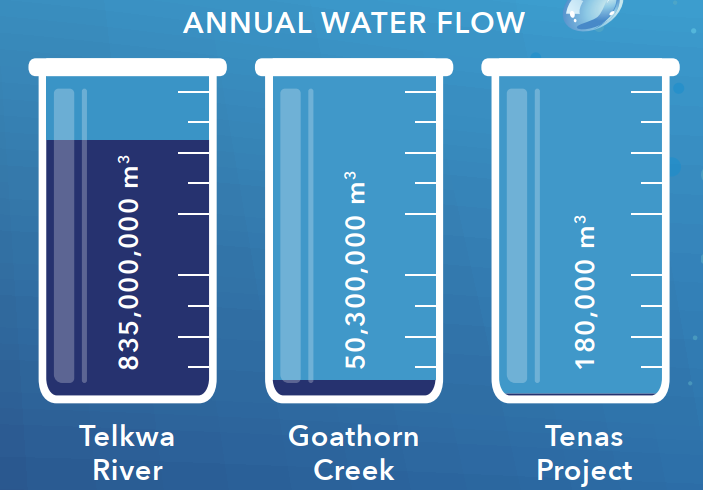
Hydrogeological and hydrology studies completed in support of the EA indicate that existing water sources within the project area are adequate to meet the project's needs through the capture of rainwater and snowmelt. Approximately 180,000 m3 per year is required for the processing plant, potable water, and the washing of heavy equipment. This water consumption is a fraction of available water flows in the region based on current monitoring as illustrated by Figure 1 below.
During the Construction and Operation Phases, Telkwa Mining will work to identify and implement opportunities to reduce water consumption by the Project.
As described above, water collected from rainwater and snowmelt will be sufficient to supply Project operations. The Project will not require diversions of the Tenas or Goathorn Creeks or any other regional rivers. Additionally, modelling has demonstrated that the collection of rainwater and snowmelt in the Project Area for Project use modifies the annual flows for the Tenas and Goathorn Creeks by less than 10% in any given month which is below the regulatory guidelines that would impact fish habitat.
Telkwa Mining recognizes selenium contamination is an issue of concern to the Wet’suwet’en. The chemical and mineralogical composition of the coal deposit at the Project differs from the deposits in the Elk Valley. The selenium levels for the Project mine rock are 10 times lower than what is present in the Elk Valley mine rocks. Additionally, a third of the material that will be moved by the Project is soil, till, and gravel materials with selenium levels that are several times lower than the rock on site. SRK Consulting was retained to complete a water and load balance model that verified that the Project will be below the BC chronic water quality guidelines for the protection of aquatic life in the downstream receiving waters for selenium.
Telkwa Mining has adopted the management practice of placing PAG rock underwater to prevent ARD which is a proven practice demonstrated by operating mines in the region.
SRK has completed a water and load balance model that demonstrates that climate change effects and prolonged drought conditions would not diminish the water cover in the management ponds on the PAG rock required to prevent acid rock drainage. The model confirmed that water covers would remain at 1.5 metres even under drought conditions, and well above the minimum water cover requirement of 0.5 metres.
SRK further evaluated the water balance for the management ponds even with no covers to mitigate the effects of evaporation and demonstrated that the water covers were still robust enough to remain greater than 1.0 meter again above the minimum requirement of 0.5 meters.
The management ponds will use natural bentonite clay and soil liners to control seepage from the ponds versus a plastic type of liner to help maintain a positive water balance. This is a proven liner system having been installed in the Uranium mines and Saskatchewan and recently in the Site C dam construction.
The dams for the Project have been designed to meet the latest, updated regulatory design guidelines created in response to the Mount Polley dam failure. Telkwa Mining has opted for a more conservative dam design factor of safety to increase long-term stability.
The environmental response to the Mount Polley dam failure has demonstrated that fish habitat impacted by a tailings dam breach can be repaired and returned to a similar state. Telkwa Mining has opted for a conservative dam design to further reduce the risk of dam failure and increase long-term stability.
[https://www.mountpolley.com/new-report-quantifies-success-of-mount-polleys-environmental-remediation/]
Imperial Metals, the owner of Mount Polley, has paid over $70 million for the clean up and remediation in response to the dam failure on top of the fines levied against the company by regulatory agencies.
Telkwa Mining has committed to preventing acid rock drainage from occurring by using management techniques that have been successfully implemented at mine sites globally such as submerging PAG material permanently underwater.
Telkwa Mining must maintain proof of compliance with plans submitted alongside regulatory applications, such as the Metal Leaching/Acid Rock Drainage Management Plan. Telkwa Mining must be able to produce these documents for annual reporting and during regulatory inspections.
Telkwa Mining will implement monitoring programs and make the results available to the Wet’suwet’en, regulatory agencies and the public directly from the laboratories. The results will also be published in annual reports. Telkwa Mining welcomes third parties on site to review the monitoring practices and results to ensure the Wet’suwet’en can trust the published information.
Concern about after the mining company has left (post-reclamation). (The holding ponds contain water that must stay in perpetuity. Dams could burst after 25 years).
Telkwa Mining is required to provide financial security prior to construction commencing that ensures that the Project is maintained and monitored for a period of at least 100 years after final reclamation is completed. This includes the management ponds.
The dams for the Project have been designed to meet the latest, updated regulatory design guidelines created in response to the Mount Polley dam failure. Telkwa Mining has opted for a more conservative dam design guidelines to increase long-term stability.
It should also be noted that the Closure and Reclamation Plan and Mine Plan is required to be updated every five years, which includes updating closure activities as well as updating the financial security required for reclaiming and closing the Project. This information is will be shared with the Wet’suet’en and they will be involved in the development of these updated plans.
Telkwa Mining is committed to performing progressive reclamation, which will minimize the extent and duration of areas disturbed for Project operations. Prior to construction, Telkwa Mining is required to provide financial security that ensures that the Project is maintained and monitored for a period of at least 100 years beyond the completion of the final reclamation.
The Tenas Project will produce metallurgical coal which is used for steel production. This differs from thermal coal, which is used for power generation and heating. The coal will be used in the process that extracts the iron form ore. Using metallurgical coal for steelmaking is the most effective technology currently available and demand is expected to continue throughout the duration of the Project, and into the foreseeable future.
Because the Project is small in scale, it is expected to generate fewer total GHG emissions than larger mining operations located elsewhere in BC. Telkwa Mining is focused on finding opportunities to reduce carbon emissions, including considering using electric fleet vehicles.
Finally, thanks to the Project’s low amount of rock that must be moved to recover the coal in the open pit and the high amount of coal recovered by the feed coal to the plant the Project is well below the provincial guidelines for GHG intensity to produce steelmaking coal.
| GHGEmissionIntensity | Units | Intensity Factor |
| Project Estimated Intensity (Covered) | tCO2e/tonnes steelmaking coal | 0.0152 |
| BCPerformanceStandard | tCO2e/tonnes steelmaking coal | 0.0270 |
Telkwa Mining is committed to leaving a positive legacy from the Project for future generations including:
- a legacy fund
- an intergenerational trust fund,
- additional coal resources for development in the Tenas, Goathorn, and Telkwa North Deposits if approved by the Wet’suwet’en, and
- Land that has been reclaimed with input from the Wet’suwet’en peoples, which will be used by diverse plant and animal species with high levels of biodiversity.
SRK has completed a water and load balance model and has determined that the Project will remain below BC water quality guidelines for the protection of aquatic life in the downstream receiving waters for all parameters, with exception of existing, naturally occurring parameters that are already in exceedance under baseline conditions – that which exists today.
Because the Project is smaller in scale for a mining project, it is expected to generate fewer total GHG emissions than larger mining operations elsewhere in BC. Telkwa Mining is focused on finding opportunities to reduce carbon emissions, including considering using electric fleet vehicles.
Finally, thanks to the Project’s low amount of rock that must be moved to recover the coal in the open pit and the high amount of coal recovered by the feed coal to the plant the Project is well below the provincial guidelines for GHG intensity to produce steelmaking coal.
| GHGEmissionIntensity | Units | Intensity Factor |
| Project Estimated Intensity (Covered) | tCO2e/tonnes steelmaking coal | 0.0152 |
| BCPerformanceStandard | tCO2e/tonnes steelmaking coal | 0.0270 |
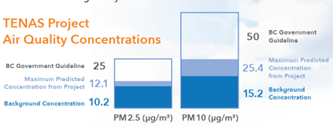
Telkwa Mining is committed to controlling dust emissions as per the 2025 Yintah Management Directives - Enhanced Tenas Project Air Quality Management Plan (2025 YMD-Enhanced Air Quality Management Plan) with the goal of not exceeding regulatory guidelines at the nearest receptors modelled in the EAC application.
Telkwa Mining has compiled comprehensive baseline data to support the return of the Project Area to its current condition following Project completion. This will be based on a reclamation plan that has been collaboratively developed and approved by the Wet’suwet’en. Monitoring of water, plants, animals, and soils will continue through the life of the Project.
Mike Smith is an environmental activist engaged in numerous personal lawsuits against seven industrial groups who produce green house gases as part of their normal operations in New Zealand. Bathurst respects the right to protest and to hold companies to account through the legal system.
Telkwa Mining and Bathurst Resources are committed to dialogue and engagement with First Nations, as demonstrated by our many partnerships with the Māori and our agreements with the Office of the Wet’suwet’en and the Witset First Nation Band.
Bathurst has demonstrated through its practices and monitoring that its operations have not negatively impacted the health, cultural heritage, or livelihoods of the Māori people.
The Tenas Project has completed a human health risk assessment that confirmed that the Project is not expected to cause adverse effects to human health.
Because the Project is smaller in scale, it is expected to generate fewer total GHG emissions than larger mining operations elsewhere in BC. Telkwa Mining is focused on finding opportunities to reduce carbon emissions, including considering using electric fleet vehicles.
Finally, thanks to the Project’s low amount of rock that must be moved to recover the coal in the open pit and the high amount of coal recovered by the feed coal to the plant the Project is well below the provincial guidelines for GHG intensity to produce steelmaking coal.
| GHGEmissionIntensity | Units | Intensity Factor |
| Project Estimated Intensity (Covered) | tCO2e/tonnes steelmaking coal | 0.0152 |
| BCPerformanceStandard | tCO2e/tonnes steelmaking coal | 0.0270 |
Telkwa Mining will implement monitoring programs and make the results available to the Wet’suwet’en, regulatory agencies and the public directly from the laboratories. The results will also be published in annual reports. Telkwa Mining welcomes third parties on site to review the monitoring practices and results to ensure the Wet’suwet’en can trust the published information.
Furthermore, from construction to closure, the Tenas Project will operate under an Environmental Management Act (EMA) Air Emissions Permit which will be required by the BC Ministry of Environment and Ministry of Mines & Critical Metals.
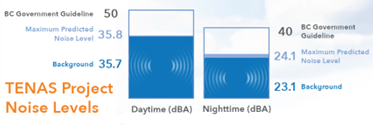
Modelling undertaken for the EAC application indicates that the Project will comply with noise and dust regulatory guidelines at its nearest receptors.
Because the Project is smaller in scale than typical mining operation in BC, it is expected to generate fewer total GHG emissions than larger mining operations elsewhere in BC. Telkwa Mining is focused on finding opportunities to reduce carbon emissions, including considering using electric fleet vehicles.
The volume of methane gas released is typically lower in coal seams mined closer to the surface. As the majority of Project’s recoverable coal is less than 50 metres from the surface, the Project is expected to have lower methane emissions than indicated in the EAC application. Telkwa Mining is planning on conducting methane gas emission studies prior to construction and these results will be shared with the Wet’suwet’en when they become available.
Telkwa Mining has committed to preventing acid rock drainage from occurring by utilizing ARD management techniques that have been successfully implemented at mine sites globally such as placing PAG material permanently underwater.
Telkwa Mining recognizes the importance of keeping our employees and the community safe and healthy. The Project is committed to implementing a robust Occupational Safety and Health Management Plan that prioritizes worker safety and promotes a culture of safety. The Project is required to implement monitoring programs and must maintain proof of compliance with plans submitted alongside regulatory applications, such as the Occupational Safety and Health Management Plan. Telkwa Mining must be able to produce these documents for inspection when a regulatory audit is conducted.
The Tenas Project has completed a human health risk assessment that confirmed that the Project is not expected to cause any significant adverse residual effects to human health.
Telkwa Mining is committed to performing progressive reclamation, which will minimize the extent and duration of areas disturbed for Project operations. Telkwa Mining is committed to leaving a positive legacy for future generations including reclaiming the land to the Wet’suwet’en satisfaction once the Project is completed.
SRK has completed a water and load balance model and has determined that the Project will meet BC chronic water quality guidelines for the protection of aquatic life in the downstream receiving waters for all parameters, apart from existing, naturally occurring parameters that are already in exceedance under baseline conditions which exist today.
Telkwa Mining has compiled comprehensive baseline data to support the return of the Project Area to its current condition following Project completion, based on a reclamation plan that will be collaboratively developed and approved by the Wet’suwet’en. In addition, Telkwa Mining is financially obligated to reclaim the site to a state and use that is approved by regulatory authorities. Telkwa Mining is also required to provide financial security prior to the start of construction that ensures that the Project will be managed and monitored for a duration of 100 years after the final reclamation is completed.
Under the current development scenario, Telkwa Mining has reserved two of the deposit areas to provide future generations with resources that they can choose to develop with the approval of the Wet’suwet’en.
Telkwa Mining has compiled comprehensive baseline data to support the return of the Project Area to its current condition following Project completion, based on reclamation that will be collaboratively developed and approved by the Wet’suwet’en. Telkwa Mining is financial obligated to reclaim the site to a state and use that is approved by regulatory authorities. Telkwa Mining is also required to provide financial security that ensures that the Project will be managed and monitored for a duration of 100 years after the final reclamation is completed.
Canadian National Railway moves an average of 45 million tonnes of coal every year. The annual volume for Tenas Project coal estimated to be 800,000 tonnes per year. Telkwa Mining believes transportation by rail on 62 trains is the safest way to move coal to coastal ports, as trains have a low risk of accident and resulting environmental effects (compared to the roughly 22,500 semi-truck loads that would be required on annual basis).
Numerous public studies have been conducted for spills that have occurred from rail derailments and to date none have found that a significant residual adverse effect has been observed.
Telkwa Mining proposes to use a chemical spray for dust suppression which has been rigorously evaluated by third party groups to confirm its environmental safety.
The trucks employed by Telkwa Mining will be equipped with a self-tarping system which will be used when they are in motion which will reduce fugitive dust emissions from these vehicles.
Telkwa Mining will implement monitoring programs and make the results available to the Wet’suwet’en, regulatory agencies and the public directly from the laboratories. The results will also be published in annual reports. Telkwa Mining welcomes third parties on site to review the monitoring practices and results to ensure the Wet’suwet’en can trust the published information.
Mining in Canada has successfully mined in the vicinity of endangered species without measurable adverse effects. Endangered species are protected in BC by legislation, regulations, and offsetting policies. In BC, the Tenas Project is required to mitigate effects on identified endangered populations of wildlife (for example Western Toad, and Caribou), and mitigation activities are built into Environmental Management Plans. Telkwa Mining will also
The Tenas Project has completed a human health risk assessment that confirmed that the Project is not expected to cause any significant adverse residual effects to human health.
Telkwa Mining will implement monitoring programs and make the results available to the Wet’suwet’en, regulatory agencies and the public directly from the laboratories. The results will also be published in annual reports. Telkwa Mining welcomes third parties on site to review the monitoring practices and results to ensure the Wet’suwet’en can trust the published information.
Telkwa Mining is committed to working collaboratively with the Wet’suwet’en to develop a Project that reflects their values and priorities, and one they can provide free, prior, and informed consent for its development.
Telkwa Mining is committed to working collaboratively with the Wet’suwet’en to develop a Project that reflects their values and priorities, and one they can provide free, prior, and informed consent for its development. Telkwa Mining will not proceed without development of the Project without consent from the Wet’suwet’en.
Telkwa Mining is committed to supporting community understanding of the Mine Plan and is available to meet with anyone seeking additional details or clarifications. Telkwa Mining is committed to ensuring equal access and clear communication for all community members. Information can be provided in alternative formats as required by the Wet’suwet’en.
Telkwa Mining has initiated communication with the Wet’suwet’en leadership and is actively learning how the Wet’suwet’en leadership prefers to be engaged. Telkwa Mining is committed to cultivating and maintaining a respectful and collaborative partnership. Telkwa Mining recognizes that communication preferences vary and is receptive to all forms of engagement. Telkwa Mining has an open-door policy with follow up meetings available for topics of concern or interest.
Third party advisors and legal counsel may be hired by the Wet’suwet’en to ensure that agreements with Telkwa Mining are legally binding with adequate protections.
Telkwa Mining is communicating with the Office of the Wet’suwet’en, Hereditary Chiefs, and leadership of the Witset First Nation Band. Telkwa Mining is also engaging with the Wet’suwet’en First Nation Band and Skin Tyee First Nation Band as directed by the provincial government through the BC EA process.
Telkwa Mining has been communicating with the Office of the Wet’suwet’en since the Project was first proposed in 2016. As time has progressed these engagement efforts have developed to include Hereditary Chiefs, and the various bands that represent the Wet’suwet’en in the region.
Telkwa Mining has been communicating with the Office of the Wet’suwet’en since the Project was first proposed in 2016. As time has progressed these engagement efforts have developed to include Hereditary Chiefs, and the various bands that represent the Wet’suwet’en in the region.
Telkwa Mining recognizes the importance of keeping our employees and the community safe and limiting effects from accidents and is committed to implementing a robust Occupational Safety and Health Management Plan that prioritizes worker safety and promotes a culture of safety. The Project will also have a comprehensive Mine Emergency Response Plan prepared to address accidents and malfunctions. This plan will be developed in collaboration with the Wet’suwet’en, regulatory agencies and emergency response organizations.
Telkwa Mining is required to implement monitoring programs and must maintain proof of compliance with plans submitted alongside regulatory applications, such as the Mine Emergency Response Plan and Occupational Safety and Health Management Plan. Telkwa Mining must be able to produce these documents for inspection when a regulatory audit is conducted.
The Wet’suwet’en will be provided the opportunity to conduct their own audits to ensure that the Project is accountable to the commitments made during the regulatory process and provide assurance to the surrounding communities.
The livestock fencing for the Tenas Access Corridor has been designed to allow for the movement of wildlife around this corridor. Furthermore, there are designated animal movement corridors left for where the clear span bridges are planned to be constructed. Finally, Telkwa Mining will work with local farmers to trail a new system of livestock management that no longer requires fencing which is being trialed in the southeast portion of BC prior to the construction of the fence to determine if this is a viable option for the Project.
Questions from the Wet’suwet’en for Telkwa Mining
We are listening. Wet’suwet’en are welcome to ask questions for Telkwa Mining and we will post responses here.
To ask a question you must create an account or log in.
These are the people that are listening and responding to your questions.

Telkwa Mining

Witset First Nation
{{question.description}}
Wet'suwet'en FAQs
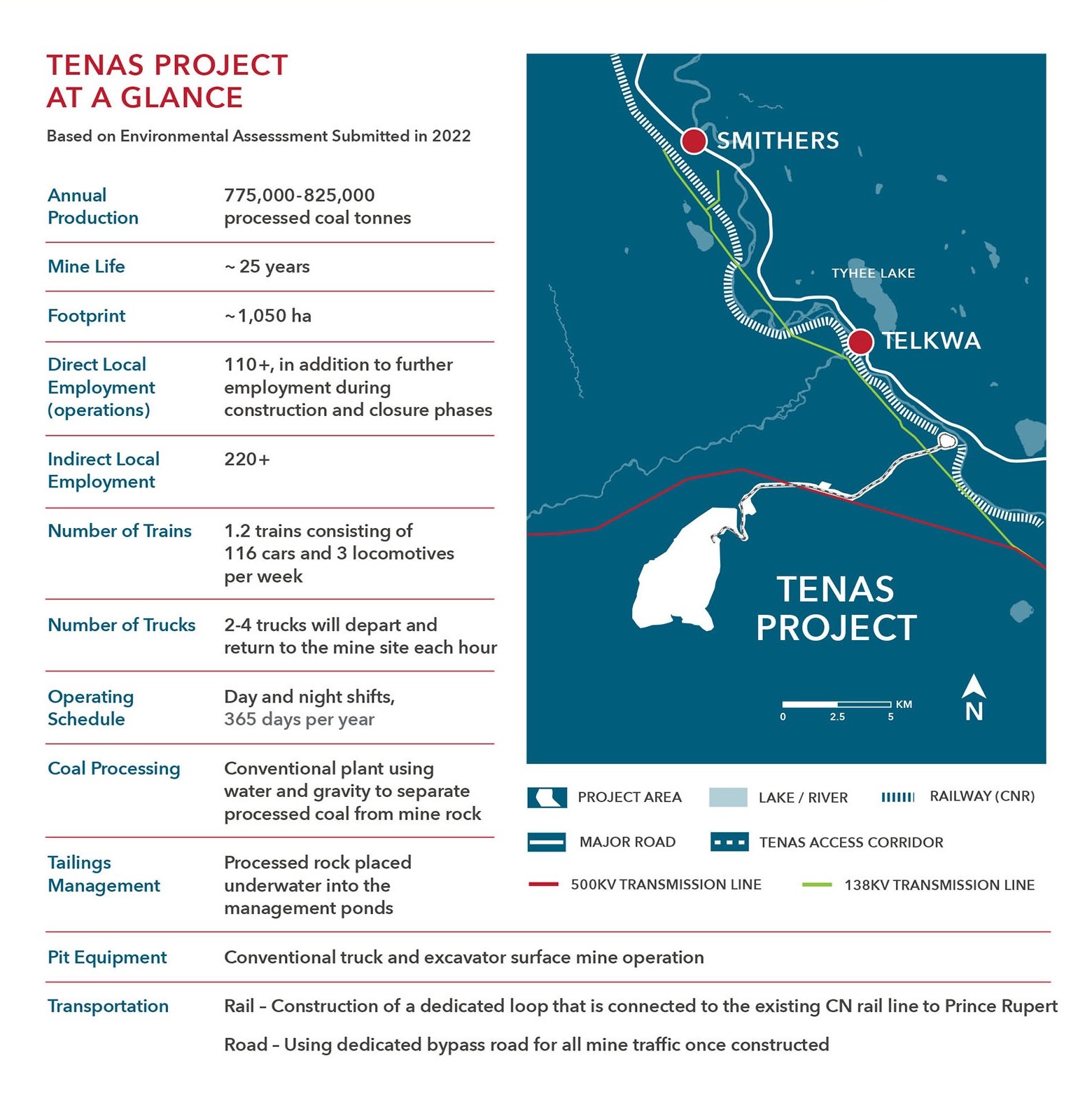
Our plan is based on a production average of 775,000 to 825,000 tonnes annually of steelmaking coal at the Tenas deposit. This means a mine life of approximately 25 years including construction, operations, and reclamation/decommissioning. This approach allows for optimal operating levels and importantly, ensures the operation is sustainable for the long term.
The Project footprint is ~1050 ha.
A dedicated road, the Tenas Access Corridor, will be constructed to allow purpose-built b-train trucks to transport coal to the rail line. Rail infrastructure includes a 2.5 km rail loop. From there, approximately 1.3 trains a week will transport coal to Port of Prince Rupert. Approximately 30 trains a day pass through Smithers on average today.
The trucks will be equipped with an automatic tarping system to reduce the potential for dust in transit. Trucks will operate 24 hours a day, seven days a week, year-round. On average, it is estimated that between two and four trucks will depart and return to the minesite each hour.
We will have a Coal Processing Plant, water management infrastructure (ditches and settling ponds), a facility for storing explosives, as well as administration and maintenance buildings. The mine will use standard surface mine equipment used at other operations, including haul trucks, backhoes, dozers, graders and drills.
We have made a long-term commitment to the region. Our Project operates from our main office in Telkwa. As part of our commitment, we are hiring locally and investing in local community initiatives, including sponsorships and in-kind contributions to local organizations like:
- Bulkley Valley Bowmen
- Bulkley Valley Food Bank
- Bulkley Valley Hospital Foundation
- Bulkley Valley Kinsmen (Telkwa BBQ)
- Coast Mountain College
- Dze L K’ant Friendship Centre in Houston
- Smithers Curling Club
- Smithers Exploration Group
- Smithers Golf and Country Club
- Smithers Rodeo Club
- The Ark Playday Centre in Telkwa
- Telkwa Elementary School
- Telkwa Museum
- Telkwa Reading Room
Since 2017, we have already contributed more than $4.3 million into the local economy through our mine exploration and permitting activities, including socio-cultural and environmental baseline studies.
We are already working with more than 70 local experts from the Bulkley Nechako region for our baseline environmental, archaeology, cultural and exploration programs. We expect to have 162 full-time equivalent employees during peak operations over the 25-year mine life. We also anticipate 148 full-time equivalent indirect positions during peak operations.
More information can be found in the 2022 EA Application, Chapter 5.1 Table 5.2-3.
We plan to hire locally, as much as possible, to create a lasting benefit for the local community. In fact, there will be no camp to serve the mine, even during construction.
We anticipate contracting opportunities for the local region to supply and service the mine. The mine will be a community presence and, as we have already done, we will continue to sponsor and support many local groups and events to enhance the quality of life in the region. The mine will also provide skills training opportunities for those looking to begin work in the mining sector.
Our objective is to create lasting benefits for the region. We are currently assessing where the mine overlaps with other activities and will look to minimize and/or mitigate the potential effects on other land uses as we develop the Project.
Rain and snow on the mine site will be collected and used to supply the process activities. This water will be stored in sediment control ponds.
No water will be taken from streams or wells.
Water for dust suppression at the rail loading site is expected to be taken from a sediment control pond that is planned near to the facilities.
About 100–130 L water per tonne of coal is lost in the coal washing process. Without recycling, the plant would use 250–300 L per tonne. Recycling allows 150–170 L per tonne (≈ 170,000 m³ per year) to be recycled—nearly equal to the Project’s total current water use.
Groundwater use in the immediate vicinity of the minesite is not expected to have any measurable effect on private wells or the Telkwa River. As part of the environmental baseline studies, and as required for permitting, detailed assessments of both surface and groundwater quality and quantity have been included in the EA regulatory application.
All mining operations contact water drains into the Tenas Control Pond where water is sampled to ensure it meets Project water quality requirements before release. Water discharges from the Project meet BC Environmental Management Act permit requirements before release.
We understand the importance of having a comprehensive ARD plan in our overall mine design and plan. We have completed an evaluation and have selected a water cover to manage any material that has a potential for ARD. Water covers are viewed as the best available method for dealing with this issue. The mine has been designed around this requirement with many aspects of the mining plan from pit sequencing to material movement being dictated by ARD management.
Should our water quality predictions suggest that selenium is above guidelines, we will develop a selenium bioaccumulation model considering site-specific baseline data, data from other relevant sites in British Columbia and Alberta, and data from literature to assess the potential for effects.
We understand that fishing is important to the community, and the Project as been designed to minimize effects to local fisheries.
We will have a comprehensive air quality management plan in place. Our plan currently includes several measures summarized below.
At the minesite:
- Water trucks and chemical agents will be used on traffic areas and stockpiles.
- The heights of stockpiles will be limited.
- Drop heights will be minimized for loading.
- Overburden piles and topsoil stockpiles will be revegetated.
- Vehicle speed will be managed.
- Windbreaks will be constructed, as needed.
- Monitoring data will be reviewed regularly to refine ongoing mitigation measures.
Along the Tenas Access Corridor:
- Coal will be transported in covered trucks.
- Vehicle speed will be managed.
- Road dust suppression techniques such as road binding agents and water trucks will be used, as needed.
At the Rail Infrastructure:
- Binding agents and/or water will be applied to stockpiles, as needed.
- Water trucks and/or sprayers and/or binding agents will be used for the loading area and
- stockpiles, as needed.
- All trains will be sprayed with a latex coating topper, a common practice at other coal mines.
Our preliminary work has shown that the minesite will not generate measurable or discernible persistent noise in the town of Telkwa. We have conducted baseline noise assessments in the area and will be conducting an assessment to predict noise levels at nearby receptors.
There will be between two to four blasts per week during daylight hours only. Blasting will likely occur in the late afternoon. Each blast event would last less than two minutes.
We have been actively working with the government to provide a range of potential mitigation measures to limit any impacts to caribou. We are collecting baseline information and reviewing existing information on habitats and populations to identify potential effects. The assessment is included in the EA regulatory application.
We have been collecting and reviewing existing information on moose habitats and populations in the Project area. Our assessment to date shows that the Project is largely outside of identified moose winter habitat. Our wildlife management plan will present the results of the assessment as well as mitigation measures to avoid and minimize any potential impacts.
This requirement is set by the provincial government in the regulatory process. We support continued access to recreational opportunities and will work with local stakeholders to minimize potential impacts and maintain controlled and specified access plans, in line with government land use requirements.
We have engaged with the Office of the Wet’suwet’en since late 2016. A Communication Engagement Agreement was signed in early 2017 as an initial formal step in the relationship. Our Cultural Use Study Areas are inclusive of the Gitdumden clan / Cas Yex house as well as the Laksilyu clan / Kwen Bea Yex house in proximity to the Project. We continue to be guided by the Wet’suwet’en on clan and house communication.
By the EAO’s Section 11 legal procedural order, we are also required to engage with Participating Indigenous Nations; Witset FN, Wet'suwet'en FN and Skin Tyee Nation.
This is for the Wet’suwet’en to determine. We are committed to engaging in whatever form works best for with the Wet’suwet’en.
Climate change is an important issue for all of us. We recognize the need to reduce global emissions to help meet climate objectives, and we support these efforts.
Steelmaking coal is a necessary ingredient in the production of steel (750 kg of steelmaking coal is required for every tonne of steel), which is, in turn, essential for green energy solutions that will help address global climate change. Wind turbines, solar panels and electric vehicles all require steel.
Closer to home, as responsible operators, we have included design mitigations to limit emissions where possible.
TML has reviewed and identified the following 5 as items Telkwa Mining could be involved with and would like to discuss further with Skin Tyee to modify and come to consensus on the top items.
5. We call upon the federal, provincial, territorial, and Aboriginal governments to develop culturally appropriate parenting programs for Aboriginal families.
13. We call upon the federal government to acknowledge that Aboriginal rights include Aboriginal language rights.
57. We call upon federal, provincial, territorial, and municipal governments to provide education to public servants on the history of Aboriginal peoples, including the history and legacy of residential schools, the United Nations Declaration on the Rights of Indigenous Peoples, Treaties and Aboriginal rights, Indigenous law, and Aboriginal–Crown relations. This will require skills- based training in intercultural competency, conflict resolution, human rights, and anti-racism.
83. We call upon the Canada Council for the Arts to establish, as a funding priority, a strategy for Indigenous and non-Indigenous artists to undertake collaborative projects and produce works that contribute to the reconciliation process.
92. We call upon the corporate sector in Canada to adopt the United Nations Declaration on the Rights of Indigenous Peoples as a reconciliation framework and to apply its principles, norms, and standards to corporate policy and core operational activities involving Indigenous peoples and their lands and resources. This would include, but not be limited to, the following:
a) Commit to meaningful consultation, building respectful relationships, and obtaining the free, prior, and informed consent of Indigenous peoples before proceeding with economic development projects.
b) Ensure that Aboriginal peoples have equitable access to jobs, training, and education opportunities in the corporate sector, and that Aboriginal communities gain long-term sustainable benefits from economic development projects.
c) Provide education for management and staff on the history of Aboriginal peoples, including the history and legacy of residential schools, the United Nations Declaration on the Rights of Indigenous Peoples, Treaties and Aboriginal rights, Indigenous law, and Aboriginal–Crown relations. This will require skills based training in intercultural competency, conflict resolution, human rights, and anti-racism.
Please see the links below located in the Documents section of the Project Overview tab:
Transition Order Documents
Get Involved
Upcoming Community Events
If you missed the community meetings in November stay connected as we will be hosting more events in 2026 with information to come soon.
Field Program
Our 2025 Field programs have now concluded.
Let us know if you would like to be involved in one of our 2026 Field programs by signing up below.