
What it's about
Witset First Nation is participating in British Columbia’s new forest landscape planning process to help decide how forests are managed on our territory.
The forest landscape planning process is an opportunity for First Nations and the Province to work together and co-develop a future forest in which:
- There’s landscape-level planning for more resilient forest ecosystems.
- Timber harvest is limited based on risks to the health of the land and water.
- First Nations values are included in decision-making on the land base.
- We’re taking an incremental step towards the co-management of forest resources.
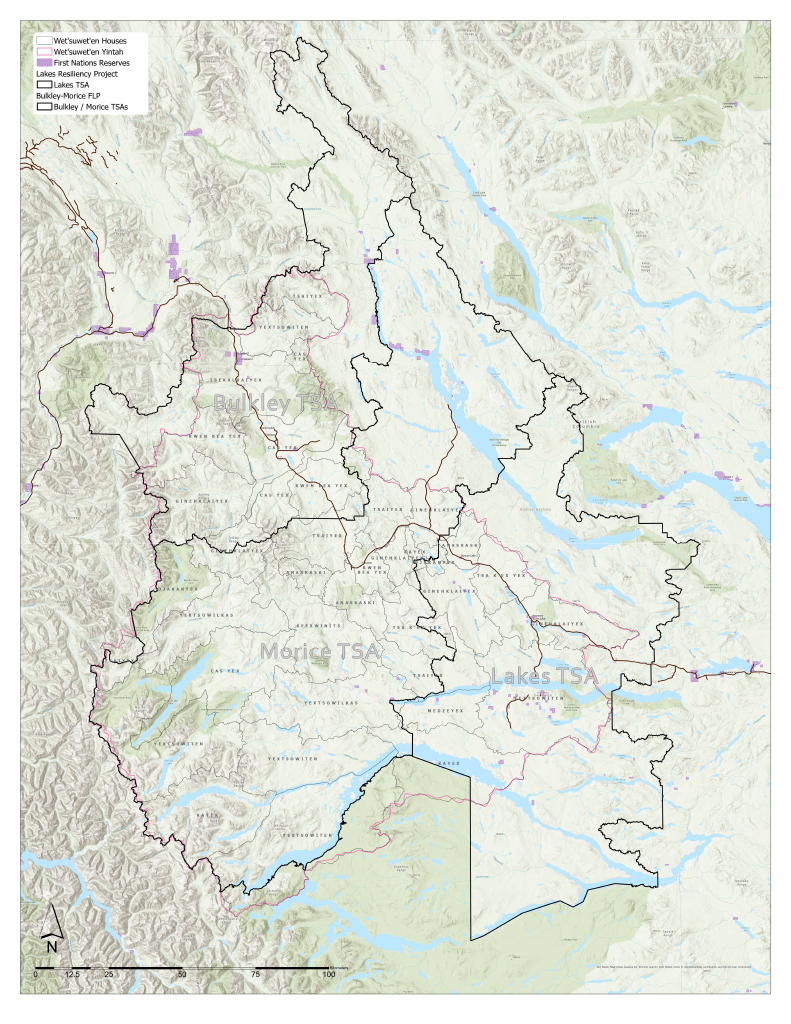
Wet'suwet'en territory overlaps with two forest landscape planning projects:
- Lakes Resiliency Project – Forest Landscape Planning Pilot Project
- Bulkley-Morice Forest Landscape Planning Project
Below: Forest Landscape Planning projects overlapping with Wet'suwet'en Territory
Project Overview
Forest landscape planning is a new chapter of the Forest Ranges and Practices Act, which governs forestry activities in British Columbia.
Key changes to the Act were made in 2021, introducing new legislation for Forest Landscape Plans and Forest Operations Plans. In a very broad sense, these changes introduced a legal mechanism for First Nations and the Province to co-develop landscape-level forestry plans in which timber harvest can be balanced with biodiversity and ecosystem health.
Through collaborative planning tables, First Nations and the Province are co-developing Forest Landscape Plans for specific areas (usually timber supply areas). Each area’s Forest Landscape Plan will:
- Manage the values placed on forest ecosystems by First Nations
- Support the protection and conservation of the environment
- Support the production and supply of timber in the forest landscape area
- Manage the values places on ecosystems by local communities
- Prevent, mitigate, and adapt to impacts caused by significant disturbances to forests and forest health
Once complete, forest landscape plans will be established by the Chief Forester, in consultation and cooperation with First Nations.
Lakes Resiliency Project
The Lakes Resiliency Project is one of four pilot Forest Landscape Planning projects shaping a new framework for sustainable forest management in British Columbia.
The Lakes Resiliency Project was started in 2019 in response to the devastating 2018 wildfires. The project area covers about 1 million hectares in north-central BC, and contains the headwaters of important tributaries of the Skeena and Fraser watersheds. It overlaps with the Lakes Timber Supply Area (excluding Tweedsmuir Provincial Park), and stretches from Babine Lake in the north to Ootsa Lake in the south.
Staff and technical representatives from First Nations, forestry licensees, community forests, and the Province meet regularly to develop a Forest Landscape Plan for the Lakes area.
Witset First Nation is observing the Lakes Resiliency Project through the First Nations Steering Committee and the project’s larger Planning Table (which consists of First Nations, the Province, and forestry licensees).
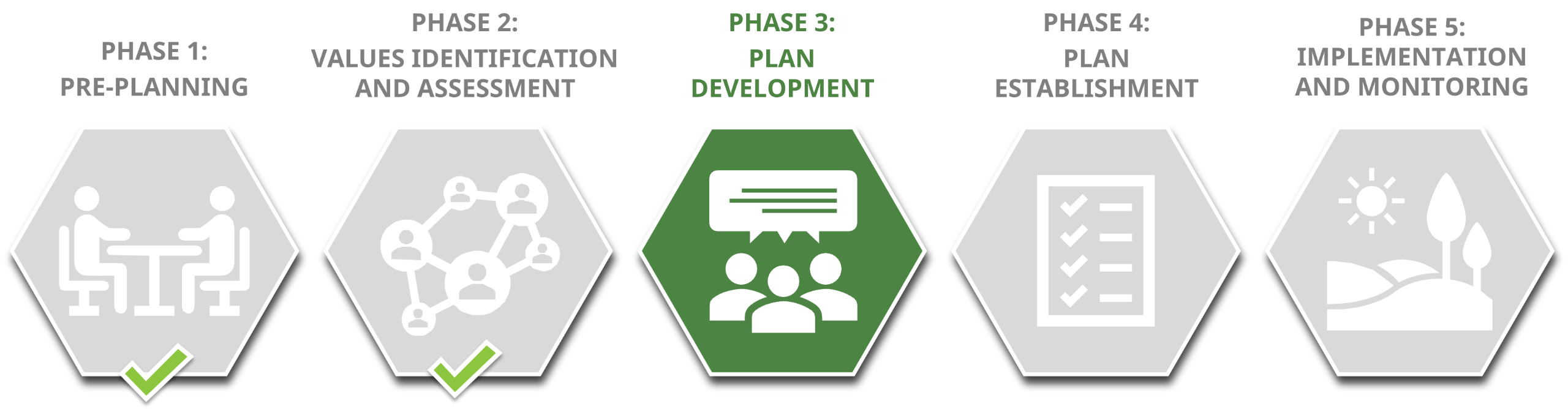
The Lakes Resiliency Project - Forest Landscape Planning Pilot Project is in Phase 3: Plan development. A full draft of the plan is expected in 2026.
Bulkley-Morice Forest Landscape Plan
The Bulkley-Morice Forest Landscape Planning Project is one of five additional projects shaping a new framework for sustainable forest management in British Columbia.
The project seeks to build on the existing framework, data and experiences from the Lakes Resiliency Project.
Witset holds a Forest Consultation and Revenue Sharing Agreement (FCRSA) within the Bulkley-Morice Forest Landscape Plan area. This agreement ensures the community receives direct economic benefits from logging activities in its traditional territory. Because the Bulkley-Morice Forest Landscape Plan falls within Wet’suwet’en traditional territory, it’s essential for Witset members to guide how these lands are managed and used.
The Bulkley Morice Forest Landscape Plan area covers about 2.24 million hectares that include the eastern drainage of the Skeena River and extends from Babine Lake in the north to Ootsa and Whitesail Lakes in the south. It includes the Bulkley Timber Supply Area with the communities of Smithers, Telkwa, Witset, and Fort Babine, and the Morice Timber Supply Area with the communities of Houston, Topley, and Granisle.
Witset First Nation is participating in the Bulkley-Morice Forest Landscape Plan through the First Nations Steering Committee and the project’s larger Planning Table (which consists of First Nations, the Province, and forestry licensees).
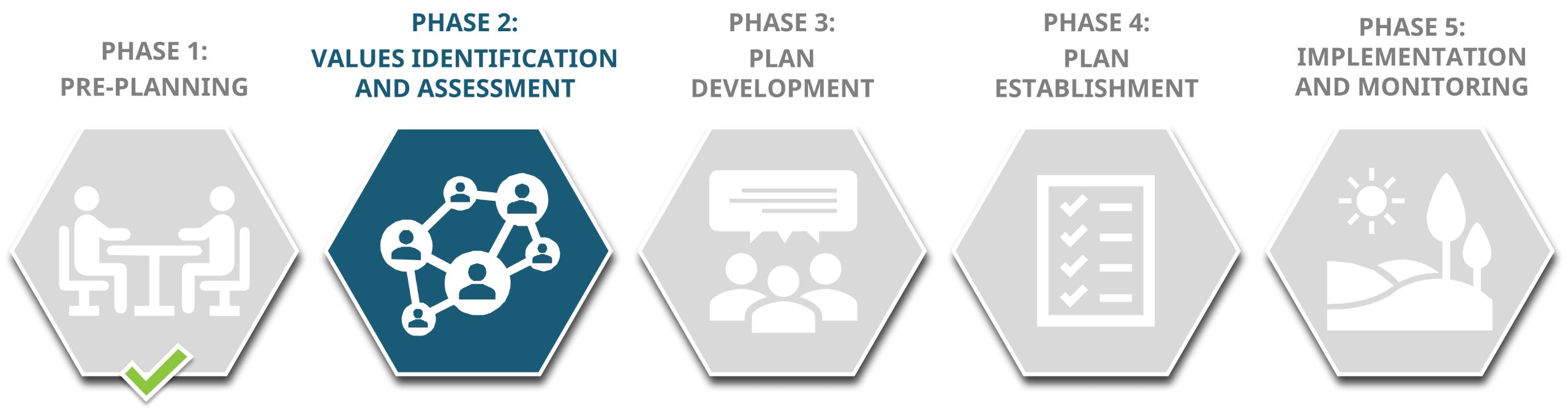
The Bulkley-Morice Forest Landscape Planning Project is in Phase 2: Values Identification and Assessment. A full draft of the plan is expected in 2027.
FAQs
Witset First Nation is participating in the Bulkley-Morice Forest Landscape Planning Project. This includes a decision-making role in the Planning Table, First Nations Steering Committee, and additional working groups formed to co-develop the plan.
Witset First Nation is observing the Lakes Resiliency Project – Forest Landscape Planning Pilot Project. This includes attending meetings convened by the Planning Table and First Nations Steering Committee.
The goal of the Forest Landscape Planning projects is to establish clear objectives and outcomes for the management of forest resource values within given Timber Supply Areas (TSA).
When completed, each Forest Landscape Plan will:
- Enhance ecosystem health and resiliency
- Manage for culturally significant ecosystems and Indigenous values
- Reflect community values
- Identify where and how forest management activities can occur
- Provide clarity on overlapping direction from strategic plans and land use objectives
- Support the production and supply of timber
- Manage for the prevention, mitigation, or adaptation to forest disturbance events such as climate change, forest health, and wildfire
Each Forest Landscape Planning project is led by a Planning Table, which includes technical representatives from the provincial government, forest licensees, and First Nations. Local communities and stakeholders are involved at key milestones throughout each project.
Both the Lakes Resiliency Project - Forest Landscape Planning Pilot Project and the Bulkley-Morice Forest Landscape Planning Project also have their own First Nations Steering Committees. The same technical representatives who sit on the project's Planning Table also sit on the First Nations Steering Committee.
The following Nations are participating in these two projects:
Lakes Resiliency Project - Forest Landscape Planning Pilot Project
Cheslatta Carrier Nation

Lake Babine Nation

Nee Tahi Buhn
Office of the Wet'suwet'en

Ts'il Kaz Koh

Wet'suwet'en First Nation
Witset First Nation
Bulkley-Morice Forest Landscape Planning Project
Cheslatta Carrier Nation
Lake Babine Nation

Gitxsan Laxyip Management Office
Office of the Wet'suwet'en
Wet'suwet'en First Nation
Witset First Nation
First Nation participation may change over time as each Nation's capacity and priorities shift.
Technical representatives are chosen by each First Nation’s chief and council (or senior leadership, in the case of an Indigenous governing body).
The Representative sits on the Planning Table and the First Nations Steering Committee. They keep their leadership informed about the development of the Forest Landscape Plan, and they bring direction received from leadership back to the Planning Table and First Nations Steering Committee.
The Representative is also the main point of contact for members of the Nation they represent to be informed about and engaged in the Forest Landscape Planning project.
The Lakes Resiliency Project – Forest Landscape Planning Pilot Project and the Bulkley-Morice Forest Landscape Planning Project each have their own First Nations Steering Committees.
The First Nations Steering Committee is made up of the technical representatives chosen by each First Nation (or Indigenous governing body), as well as a facilitator.
The First Nations Steering Committee is a forum to learn from each other, develop recommendations, and present First Nations perspectives to the Planning Table from a position of strength and collaboration.
The First Nations Steering Committee works together to determine a united set of values and protocols for Nations participating in each Forest Landscape Planning project. These help guide the legal requirements for how forestry is carried out in these areas. Through this process, Nations work together on stewardship priorities and community interests. The protocols they develop will influence how forests are managed in these territories.
The First Nations Steering Committees in both the Lakes Resiliency Project and the Bulkley-Morice Forest Landscape Planning Project work together to develop a framework to represent healthy ecosystems within Nations’ understanding and connection with the land. This may include:
- Identifying cultural wellbeing objectives for valued ecosystem components included in the plan;
- Developing special management requirements for culturally sensitive areas, while also maintaining confidentiality for cultural sites and use areas; and
- Incorporating best management practices and stewardship guidelines shared by participating First Nations.
Yes. Within the Lakes Resiliency Project – Forest Landscape Planning Pilot Project, the First Nations Steering Committee has advocated for numerous successful changes, including government-to-government meetings with technical representatives, educational workshops, relationship-building activities, and overall procedural improvements.
These efforts have informed the Bulkley-Morice Forest Landscape Planning Project, where the First Nations Steering Committee have put into action the learnings, while continuing to improve on the consensus-based decision-making at the Planning Table.
Generally, decolonial education is a journey. The First Nations Steering Committee acknowledges the imperfections and limitations of the Forest Landscape Planning process, and will continue to provide recommendations to improve the process.
With the legal recognition of the United Nations Declaration on the Rights of Indigenous Peoples in BC, First Nations are starting to take back our decision-making authority. We are moving from being just consulted on plans to having real decision-making power.
Forest Landscape Planning is part of the new way of doing business. By participating in the planning process, Nations may ensure they’re benefitting from the forest economy, for the benefit of their communities, and in such a way that their values are represented in the long-term impacts on the land.
Participating in the planning process itself also has benefits. It reinforces the right for Nations to make land use decisions, and it builds and strengthens relationships with representatives of other Nations as well as provincial staff.
The Bulkley-Morice Forest Landscape Planning Project and Lakes Resiliency Project – Forest Landscape Planning Pilot Project each serve as a starting point for discussions on what Nations want on the land, while ensuring their voices are heard and working in partnership with the Province.